

FAFSA Guide for Parents. The FAFSA Advantage: Smart Filing Can Save Families Thousands.
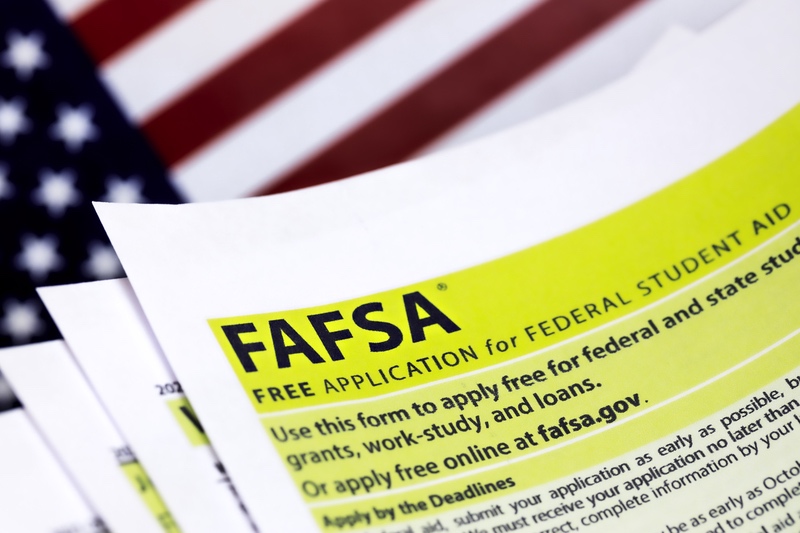
When most families hear “FAFSA,” they picture a long government form, an overwhelming process, and a lot of uncertainty. But the FAFSA—the Free Application for Federal Student Aid—is more than a form. It’s a planning tool. It gives families clarity and students access to opportunities they might not realize exist. Our FAFSA guide for parents can help.
Unfortunately, many families skip it altogether, either because they assume they won’t qualify or because the process feels confusing. But used strategically, the FAFSA can help your family understand what college will truly cost and what resources might be available before your student even applies.
Below is a practical, parent-friendly guide to the FAFSA and understanding how it fits into your family’s financial and admissions strategy.
Before You File: The #1 FAFSA Mistake Families Make
Many parents believe:
“We won’t get anything, so why bother?”
But that assumption is often wrong. Aid isn’t based on income alone. Your household size, assets, dependency status, and the college’s cost of attendance can all influence eligibility.
Still, not every family should automatically file, there is an income threshold at which you will not qualify. The smartest first step is to use each college’s Net Price Calculator (NPC).
You’ll typically find this on the financial aid page of every college website. (Or just Google “X College Net Price Calculator.”) These tools estimate real costs and signal potential institutional scholarships.
If you’re still unsure after using the NPCs, call the college’s financial aid office. Staff can help prospective families interpret their specific situation. Reach out early—ideally, no later than early to mid-summer before the student’s senior year.
The FAFSA Formula: Understanding the Student Aid Index (SAI)
What Families Need to Know About the SAI
- It measures ability to pay—not your bill.
The SAI doesn’t tell you what you’ll pay. It simply guides colleges in determining eligibility.
- It can be negative. Students with significant financial need may have an SAI as low as – $1,500. A lower or negative SAI indicates a higher level of financial need, making your student more likely to qualify for need-based aid like Federal Pell Grants and subsidized loans.
- It guides federal, state, and institutional aid decisions.
- Colleges use a simple formula to determine financial need:
Cost of Attendance (COA) minus Student Aid Index (SAI) = Financial Need
But… a college may still “gap” you by covering only some of your need. Look closely at each school’s financial aid policies:
- Does the college meet full need?
- Does it meet need without loans?
- Does it rely heavily on parent PLUS loans?
- Will the financial aid offer remain the same in subsequent years?
To estimate your SAI before you file, use the Federal Student Aid Estimator.
If in doubt, call the financial aid office. They are genuinely happy to walk families through scenarios, questions, and affordability concerns.
FAFSA vs. CSS Profile: What’s the Difference?
You may encounter two major financial aid applications:
FAFSA
- Free
- Required by most U.S. colleges
- Determines eligibility for federal aid
- Simpler and shorter
CSS Profile
- Requires a submission fee
- Managed by the College Board
- Required mostly by private colleges
- Determines eligibility for institutional aid
- Asks for more detail (home equity, non-custodial parent income, assets, etc.)
Some colleges require only the FAFSA; many require both. Always check each college’s requirements.
Why Families File the FAFSA
Completing the FAFSA could open doors that families have not considered:
1. Grants
Federal grants (like Pell) rely on FAFSA data.
2. Access to Federal Loans
Federal loans often offer lower rates and safer repayment options. Filling out the FAFSA may unlock access to both subsidized and unsubsidized loans.
3. Work-Study Eligibility
Students may be able to earn money through an on-campus, federally-funded job to help reduce costs.
4. State and Institutional Aid
Some states grants and college-funded scholarships require a FAFSA even for higher-income families.
5. Merit Aid at Some Schools
A very small number of colleges require the FAFSA even for merit scholarships.
When to Complete the FAFSA—and What You Need
This year, the FAFSA opened in September. Deadlines vary by state and institution, but generally need to be filed before or at the same time as the application for admission. Early submission gives your student the best chance at limited funds.
You’ll need:
- Student’s Social Security Number
- Parent and student tax returns/W-2s
- Records of untaxed income
- Current asset information
ICC TIP: When completing the FAFSA for your child, always fill it out as the student even if you’re the one entering the information. And remember, it must be completed every year your child is in college. Early submission matters: some aid is limited and awarded on a first-come basis.
Lastly, be sure you complete the FAFSA for the correct enrollment year. Students entering college in the fall of 2026 should complete the 2026–27 FAFSA.
