

The Best Summer Programs for High School Students: What Parents Need to Know
Summer may still feel far away, but for families hoping to secure a spot in one of the best summer programs for high school students, the time to start planning is now. In fact, application deadlines for some of the most competitive programs are rapidly approaching, and applications for others are already open.
With so many summer opportunities available, how do you know which ones are worth considering?
Should your teen apply to a prestigious research program? Take college-level courses? Attend a creative writing workshop? Explore business, engineering, medicine, or the arts?
And does it sometimes feel like everyone has an opinion about what your child must do to get into a great college?
The answer depends on your student.
The best summer program isn’t necessarily the most famous or expensive one. It’s the one that helps your student explore their interests, develop their strengths, and build experiences that can support their college goals.
At International College Counselors (ICC), we help families navigate these choices using our proprietary database of more than 500 carefully curated summer opportunities, organized by subject, interests, selectivity, and cost. From highly selective research programs to creative writing workshops and college-level courses, we can help families discover opportunities they might not have found on their own.
Here’s what we encourage families to consider when choosing a summer program.
1. There Are Outstanding Summer Programs for Almost Every Interest
When families think about prestigious summer programs, science and research opportunities often come to mind.
One standout is the Research Science Institute (RSI), a highly competitive, six-week summer program for rising high school seniors that combines advanced STEM coursework with original scientific research. Students work with experienced researchers, conduct their own projects, and present their findings. And the program is free.
For a strong student who’s passionate about scientific research, RSI can be an incredible opportunity.
But what if your teen loves writing?
The Iowa Young Writers’ Studio at the University of Iowa is a highly regarded summer program for students passionate about creative writing. Participants develop their writing, receive feedback from instructors and peers, and spend time with other talented young writers.
And the possibilities extend far beyond science and writing.
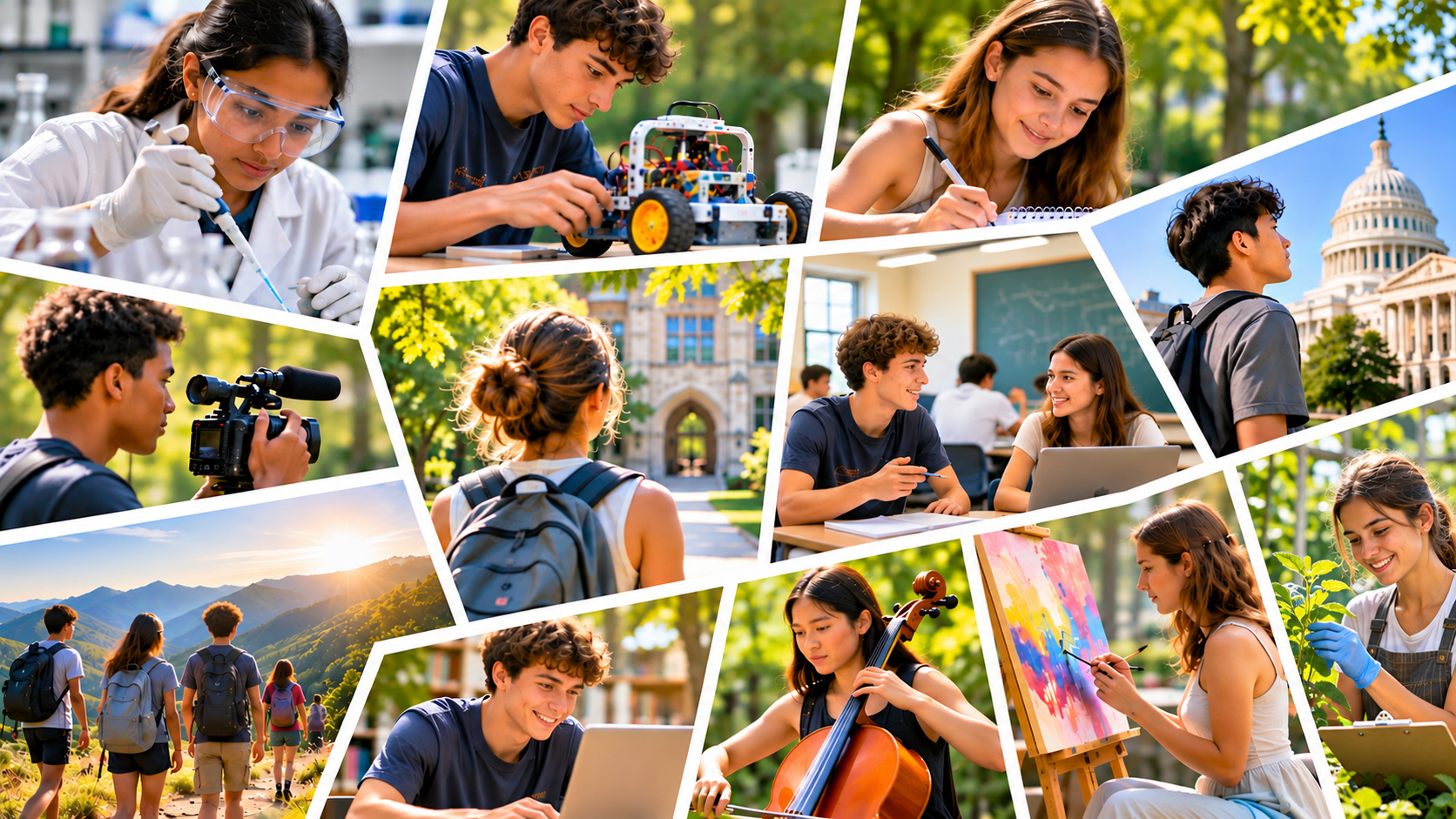
Students can find excellent summer programs in business, entrepreneurship, engineering, economics, politics, international relations, architecture, filmmaking, music, and many other fields.
A student interested in business might explore how companies are built and managed. An aspiring engineer could tackle hands-on design challenges. A future political science major might study diplomacy, public policy, or international affairs.
The important thing is finding a program that fits your student’s interests and supports the academic direction they’re beginning to develop.
2. A Famous University Name Doesn’t Tell the Whole Story
A summer program at Harvard, Yale, Stanford, or another well-known university can sound impressive. And many university-based summer programs offer excellent academic experiences.
But here’s something families should understand: Attending a summer program at a prestigious university doesn’t automatically improve a student’s chances of being admitted to that university.
It also doesn’t necessarily mean the university runs the program. Some summer programs are operated by independent organizations that use university facilities.
That’s an important distinction.
Not all summer programs are equally selective. Some have rigorous admissions processes and require outstanding academic records, recommendations, essays, portfolios, or demonstrated accomplishments. Others are open to a much broader range of students who meet basic eligibility requirements.
That doesn’t mean less selective programs aren’t worthwhile. They can be fantastic opportunities to explore a subject, experience college life, meet students with similar interests, and learn from knowledgeable instructors.
In some cases, students may also develop relationships with instructors or mentors who get to know their work well enough to write meaningful recommendations in the future.
If strengthening your teen’s college application is one of your goals, it’s important to understand a program’s selectivity, who actually runs it, and what students gain from attending.
A recognizable university name alone doesn’t tell you everything you need to know.
3. More Expensive Doesn’t Mean Better
Summer programs for high school students can range from free to several thousand dollars, and cost doesn’t always reflect quality or admissions value.
Some of the most competitive programs are free. Others charge tuition, and some offer scholarships or need-based financial aid.
But don’t assume that a program charging tuition is somehow less valuable.
Just as respected athletic and arts programs often charge fees, many excellent academic programs do, too. A program’s cost alone doesn’t determine its quality, selectivity, or educational value.
And if budget is an important consideration, there are also excellent programs at local universities, community colleges, and online that may offer strong academic experiences at a more affordable price.
When evaluating programs, consider what students actually receive.
Will they work closely with professors or researchers? Participate in hands-on projects? Earn college credit? Receive individual feedback? Develop a portfolio or complete a meaningful final project?
If a program offers college credit, check whether the colleges your student may eventually attend will accept those credits.
For some students, a residential summer program may be well worth the investment. For others, a shorter, less expensive, or local program may offer exactly what they need.
The goal is to find an opportunity that makes sense for both your student and your family.
4. How Can Summer Programs Help With College Admissions?
The right summer program can help students explore possible majors, deepen existing interests, and build skills that carry into the school year. But students at different stages of high school need different experiences.
A rising sophomore who’s curious about psychology might benefit from an introductory course. A rising senior who’s already conducted independent neuroscience research might be ready for a more advanced program involving laboratory work or mentorship.
Colleges want to understand what genuinely interests students and how they’ve chosen to pursue those interests. A summer program can be one way to demonstrate that commitment, especially when students continue building on what they’ve learned.
For example, a student interested in engineering might design and build a prototype. An aspiring writer might develop a portfolio of original work. A student passionate about biology might conduct research alongside scientists.
These experiences can add depth to a student’s activities list, inspire meaningful college essays, and give students something specific to discuss during interviews.
And sometimes, a summer experience becomes the starting point for something even bigger: an independent research project, a new school club, a community initiative, or an interest that develops throughout high school.
But there’s an important distinction: It’s not simply attending a program at a prestigious college that matters. It’s what students learn, accomplish, and do with the experience afterward.
But there’s an important distinction: It’s not simply attending a program at a prestigious college that matters. It’s what students learn, accomplish, and do with the experience afterward. While no summer program guarantees college admission, we have thousands of successful college applications that demonstrate how the right experiences can strengthen a student’s academic and extracurricular profile.
5. Don’t Miss the Summer Program Application Deadlines
Some of the best summer programs have deadlines much earlier than families expect.
For example, applications for the 2027 Research Science Institute close December 11, 2026. The Iowa Young Writers’ Studio will accept applications for its 2027 residential program from January 25 through February 7, 2027.
Other programs have deadlines throughout the winter and spring, and some offer rolling admissions.
Depending on the program, students may need essays, recommendations, transcripts, writing samples, portfolios, or other application materials.
And competitive programs often require more than strong grades. They may look for evidence of genuine interest, initiative, previous experience, or exceptional talent.
That’s why we recommend starting early and applying to a thoughtful mix of programs.
Just as students develop balanced college lists, they should consider summer opportunities with varying levels of selectivity, along with programs that fit their interests and goals.
A little planning now can open the door to some wonderful opportunities.
6. Let ICC Help You Find the Right Summer Program
With so many options, researching summer programs can become a project of its own.
That’s where International College Counselors can help.
Our experienced college admissions consultants use ICC’s carefully curated database to identify summer programs that match each student’s interests, academic background, goals, and budget. We can recommend highly competitive programs worth reaching for, along with excellent opportunities that have more accessible admissions requirements.
We also help families think about the bigger picture. Which programs complement a student’s academic interests? Which might help them explore a potential college major? And which experiences could lead to continued involvement, research, or projects during the school year?
With years of experience guiding students through the college admissions process, our counselors understand how summer opportunities can fit into a student’s broader academic and extracurricular plans.
There are exceptional summer opportunities for students with all kinds of interests, abilities, and budgets. The key is knowing where to look and choosing wisely.
Ready to explore the possibilities for your teen?
Contact International College Counselors to learn how we can help you find summer programs that match your student’s interests and college goals.
With some application deadlines rapidly approaching, now is the time to get started.
Frequently Asked Questions About Summer Progams for High School Students
Do summer programs help with college admissions?
Yes, the right summer program can strengthen a student’s college application by demonstrating academic interests, initiative, and commitment. Colleges are interested in what students learn, accomplish, and pursue beyond the classroom. However, attending a prestigious program alone doesn’t guarantee an admissions advantage.
What are the best summer programs for high school students?
The best programs depend on a student’s interests, academic background, grade level, and goals. Highly regarded options include the Research Science Institute (RSI) for science and the Iowa Young Writers’ Studio for creative writing. There are also excellent programs in business, engineering, medicine, the arts, and many other fields.
Do colleges prefer selective summer programs?
Highly selective programs can demonstrate academic achievement or talent, but colleges also value meaningful experiences at less selective programs. What matters is how well the experience fits the student’s interests and what they gain from it.
When should high school students apply for summer programs?
Families should begin researching programs in the fall. Some competitive programs have deadlines as early as December or January, while others accept applications throughout the winter and spring.
Are expensive summer programs worth it?
Some are, but a higher price doesn’t necessarily mean a better program. Families should evaluate the quality of instruction, opportunities for hands-on learning, mentorship, selectivity, and how well the experience supports their student’s goals.
