

FSU Admissions 2027: Early Decision, Scores, Deadlines, Pathways and What Applicants Need to Know
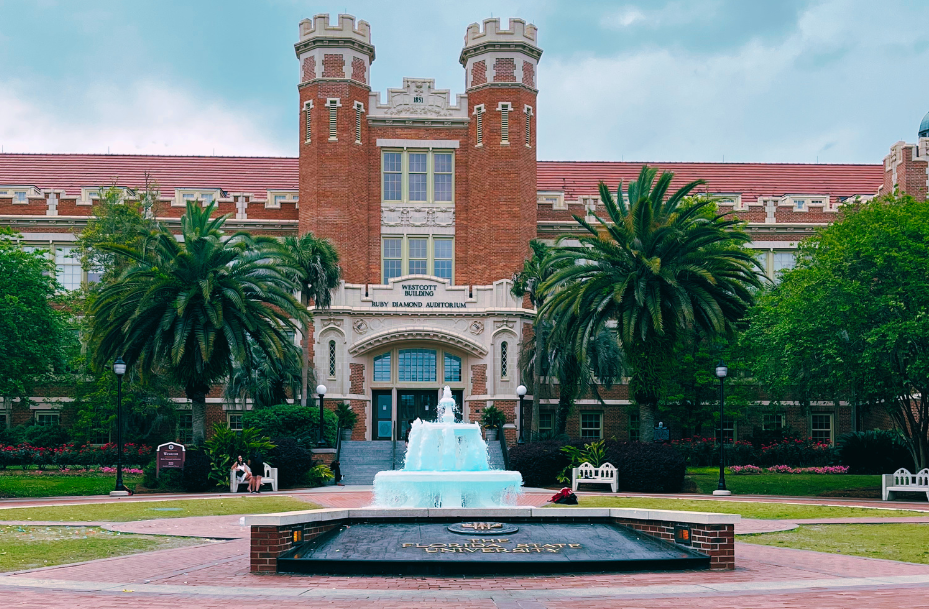
Florida State University continues to be one of the most popular public universities in Florida, and FSU admissions have become increasingly competitive.
International College Counselors recently attended the State University System of Florida Tour and received updates directly from Florida State University. These updates gave our team a close look at what’s changing for Fall 2027 FSU applicants.
ICC students continue to see strong results at FSU. Among the Fall 2026 entering class, 93 ICC students were admitted to FSU, for an 80% ICC acceptance rate, compared with FSU’s overall acceptance rate of about 20%.
For Fall 2026, FSU received a record 96,100 first-year applications, up 12% from the year before. In fact, the number of first-year applications has increased more than 200% since 2016.
FSU GPA, SAT, ACT and CLT Scores
For students admitted to FSU for Fall 2026, the middle 50% ranges were:
- Core GPA: 4.3–4.6
- ACT: 31–34
- SAT: 1380–1480
- CLT: 102–106
About 92% of admitted students ranked in the top 10% of their high school class, and 80% earned all A and B grades.
FSU also likes to see students go beyond the minimum high school course requirements. On average, admitted students completed roughly 4.5 years of English, six years of math, five years of natural science, five years of social science, and 3.5 years of world language.
A few other numbers help demonstrate FSU’s popularity. The university reports a 97% first-year retention rate, the best in the State University System, and a 78% four-year graduation rate. About 25% of undergraduates participate in research, and FSU has been ranked the No. 1 school in Florida for internships by The Princeton Review.
For Fall 2027 applicants, however, one of the biggest changes is the addition of Early Decision.
FSU Early Decision for Fall 2027
For the first time, Florida State University is offering Early Decision.
Students now have four FSU application plans:
- Early Decision
- Early Action
- Regular Decision
- Rolling Admission
The biggest difference is that FSU Early Decision is binding.
If a student applies Early Decision and is admitted, that student is expected to enroll at FSU, immediately withdraw applications from other colleges, and submit an enrollment deposit by January 15.
FSU Early Decision Deadline
For Fall 2027:
- Application deadline: October 15
- Materials deadline: October 22
- Decision release: December 17
- Enrollment deposit deadline: January 15
Required materials may include test scores, Florida residency information, and STARS.
Early Decision makes the most sense for a student who knows FSU is the clear first choice and is comfortable applying with the grades and test scores already on hand.
It should not simply be used because a student thinks it may improve the odds of admission.
Families also need to think carefully about cost. A student applying Early Decision is committing before having the opportunity to compare financial aid packages from several colleges.
FSU says Early Decision applicants will receive full consideration for admissions merit scholarships, and merit scholarship information will be included with the December admission decision.
Students applying Early Decision may still apply to other colleges through non-binding Early Action, Regular Decision, or Rolling Admission. They may not apply to another binding Early Decision program.
If an Early Decision applicant is deferred, the binding agreement no longer applies, and the application moves into the Regular Decision round.
If an Early Decision application is denied, the application will not be considered again during that admissions cycle.
FSU Early Action for Fall 2027
FSU’s Early Action option remains non-binding and is available only to Florida residents.
The FSU Early Action deadline is October 15, with decisions released December 17.
For many Florida students, Early Action may still be the most appealing option. Students can receive an early answer from FSU but keep their options open until May 1.
This gives families time to compare colleges, scholarships, financial aid, and overall fit before making a final decision.
FSU gives priority consideration for its limited merit scholarship funds to students applying through Early Decision and Early Action, so Florida residents who are ready to submit a strong application by October should consider one of these plans.
Students applying for FSU’s CARE program should know that CARE decisions are released throughout the different admission rounds rather than in one specific round.
FSU Regular Decision and Rolling Admission Deadlines
Florida residents who are not ready to apply by October, as well as out-of-state applicants, still have time.
The FSU Regular Decision deadline is December 1, with decisions released February 18.
Rolling Admission begins after December 1 and has a deadline of March 1, with decisions released on a rolling basis in April.
Students should be careful about relying on Rolling Admission.
According to FSU admissions, only 16 students in the Fall 2026 cycle were admitted during the rolling round from roughly 10,000 applicants. Many others were offered alternate options such as FSU Next.
For students who are serious about attending FSU, waiting until the final round is not the strongest approach.
FSU Admissions by the Numbers
For Fall 2026, FSU admitted approximately:
- 13,900 students through Early Action
- 4,900 students through Regular Decision
- 18,800 Summer and Fall students across the Early, Regular, and Rolling rounds
FSU also reported that 42,410 applicants asked to be considered for both Fall and Summer, while 25,584 were open to one or more Seminole Pathways.
Those numbers show just how many applicants are willing to consider a different starting term or route into Florida State University.
What if Your GPA or Test Scores Fall Outside FSU’s Typical Range?
Students often think only about Fall admission to the Tallahassee campus. But there are several other ways to become a Seminole.
For students whose grades or test scores fall outside FSU’s typical Fall admitted-student range, it can be worth considering Summer admission and FSU Seminole Pathways.
FSU Summer Admission
Students can request consideration for FSU Summer admission in addition to Fall.
This may be worth considering for a student who wants FSU but whose academic profile may not be quite as strong as the typical Fall admit.
Importantly, indicating that you are willing to be considered for Summer or another FSU pathway does not mean you will not be considered for your first-choice term.
Students can update their term and pathway preferences through the FSU Admissions Portal until about two weeks before decisions are released.
Students should also check their FSU Admissions Portal regularly. FSU uses the portal as the primary source for application updates, progress, FAQs, how-to videos, and requests for additional information.
FSU Seminole Pathways
Students who are not offered traditional Summer or Fall admission may instead be offered one of FSU’s Seminole Pathways.
FSU Panama City Pathway
Some students may be offered the opportunity to begin at FSU Panama City rather than the Tallahassee campus.
Students in this pathway spend the Summer, Fall, and Spring terms in Panama City and can then either remain there or request a change to the Tallahassee campus.
For students who are comfortable starting college on a smaller campus, this can be a good path to FSU.
FSU First Semester Abroad
Students in the First Semester Abroad pathway begin with an online FSU course during the Summer and then spend the Fall semester at one of FSU’s international study centers in:
- London, England
- Florence, Italy
- Valencia, Spain
- Panama City, Panama
After successfully completing the Fall semester abroad, students can join the Tallahassee campus in January.
For a student who is comfortable going abroad right after high school, this can be an exciting way to begin college.
FSU First Year Abroad
FSU also offers a First Year Abroad pathway.
Students spend their first academic year overseas and then continue at FSU.
This option can be especially attractive for out-of-state students because students who successfully complete the required year abroad may qualify for an out-of-state tuition waiver.
For out-of-state families, that tuition waiver can make a significant financial difference.
FSU Next
FSU Next offers another route to Florida State University.
Students spend the Fall semester taking 12 to 15 credit hours at Tallahassee State College, formerly Tallahassee Community College, while also taking a one-credit FSU course called Gateway to Garnet and Gold.
To transition to FSU for the Spring semester, students must earn at least a 3.0 Fall college GPA with no grade below a C and successfully complete the FSU course.
This is not simply a semester of waiting. Students need to perform well academically to make the transition.
What Happens if You Are Deferred From FSU?
A deferral from FSU is not the end of the road.
Deferred applicants first move into the Regular Decision review process.
For Fall 2026, FSU deferred approximately 6,000 students to Regular Decision. Roughly 4,500 chose to remain under consideration.
Of those:
- About 870 were eventually admitted for Summer or Fall
- Around 800 were offered Seminole Pathways or FSU Next
Deferred students can provide updates including:
- Senior grades through STARS
- New SAT, ACT, or CLT scores
- New activities, awards, or accomplishments
- An optional “Why FSU?” statement or video
FSU informed counselors that deferred applications are reviewed by full-time admissions staff.
It is most helpful to send new information that adds to the application. Repeating what FSU already knows is unlikely to help.
What About the FSU Waitlist?
For Fall 2026, FSU offered approximately 3,000 students a place on the waitlist, and roughly 1,750 accepted a spot.
By the spring, FSU had already moved a few hundred students from the waitlist into FSU Next.
Does FSU Admit by Major?
Generally, FSU does not admit first-year students by intended major.
Business, engineering, biology, political science, and undecided are among FSU’s most popular areas of study, but students should not choose a less popular major simply because they think it will improve their chances of admission.
Students should select the academic area that honestly reflects their interests.
How FSU Reviews Applications
FSU uses a holistic admissions review process built around the university motto Vires, Artes, Mores, meaning Strength, Skills, and Character.
According to information shared with counselors, FSU applications are rated as Strong, Average, or Weak in each of these three areas.
Vires: Academic Strength
Admissions readers examine:
- Transcript
- Grades
- GPA
- Test scores
- Course rigor
- High school context
Artes: Skills and Involvement
FSU looks at what students have done both inside and outside the classroom.
FSU reads both the Common Application Activities section and the student’s résumé, so students should use the résumé to add depth rather than simply repeat the same information.
Mores: Character
FSU wants to understand the student’s:
- Goals
- Experiences
- Background
- Formative experiences
- Potential contribution to the campus community
Academics matter, but FSU is also paying attention to what students have done and who they are.
What Does FSU Want From the Common Application Essay?
FSU encourages students to make sure the essay is really about the applicant.
As students write their Common Application essay, they should think about four questions:
- Who? Is the essay focused on you?
- What? What are you telling FSU about who you are today?
- When? Is the timeframe clear?
- Why? What will the reader learn about you that is not already available elsewhere in the application?
The goal is to use the essay to add something new and personal to the application.
STARS Has Replaced SSAR at FSU
Families who have been through Florida college admissions before may be familiar with SSAR.
STARS, the Self-reported Transcript and Academic Record System, has replaced SSAR at FSU.
FSU requires students to complete STARS as part of the first-year application process.
Rather than submitting an official transcript initially, students report their own high school courses and grades through STARS.
Accuracy and integrity are important. If a student is admitted, FSU will later compare the self-reported information with the official transcript.
Does FSU Require ACT Science?
No. FSU does not require the ACT Science section for admission.
This is especially helpful for students taking the newer version of the ACT, where Science is optional.
Students should still check the requirements for scholarships or outside programs they are pursuing because those requirements may differ from FSU’s admissions requirements.
Applying to FSU With an AA From Dual Enrollment
A student who earns an Associate in Arts degree while still in high school should still apply to FSU as a first-year applicant.
First-year applicants who will earn an AA through Dual Enrollment do not have to submit test scores but must complete the AA Degree Confirmation Form in their admissions portal.
Students should also carefully review FSU’s Academic Program Guide when choosing Dual Enrollment courses to make sure they stay on track for the prerequisites required by their intended major.
Transferring to FSU With an AA Degree
FSU gives priority to Florida students earning an Associate in Arts degree as long as they are on track for the requirements of their intended major.
Students planning to transfer to FSU should use FSU’s Academic Program Guide to make sure they are completing the correct prerequisite courses.
FSU reports the No. 1 graduation rate in Florida among AA transfer students and has a separate advising office dedicated to transfer students.
FSU Honors Program
FSU Honors is not simply looking for students with the highest numbers. The university says it is looking for students who are a good fit for the Honors Program and its community.
For the most recent cycle, FSU reported approximately:
- 10,400 Honors applications
- 3,000 Honors admits
- 800 Presidential Scholars semifinalists
- About 60 Presidential Scholars
Special Opportunities Through FSU Honors
FSU Honors Medical Scholars Program
The Honors Medical Scholars Program is designed for students interested in attending medical school.
Participants receive individualized advising and mentoring from FSU College of Medicine faculty, along with opportunities for medical and community service.
After completing the required pre-med coursework, students may become eligible to apply to the FSU College of Medicine through its Early Decision process.
The program is currently limited to first-time college students who are also admitted to FSU Honors.
FSU Honors Legal Scholars Program
For students considering law, the Honors Legal Scholars Program connects a small group of Honors students with the FSU College of Law while they are still undergraduates.
Students receive pre-law advising, access to law professors, students, and alumni, as well as opportunities to attend law school classes and events.
Students who meet the program requirements may also become eligible for automatic admission to the FSU College of Law.
For students already thinking seriously about medicine or law, these programs are worth a close look.
FSU Conditions of Admission
As with most colleges, acceptance to FSU is conditional.
Admitted students are expected to:
- Finish senior year in good standing
- Earn no senior-year grade below a C
- Maintain at least a 2.0 GPA in Dual Enrollment coursework
- Notify FSU of schedule changes from what was reported in STARS
- Submit official test scores and transcripts by FSU’s deadlines
Students admitted as Florida AA candidates must also have the AA degree officially posted.
What’s New at Florida State University?
Admissions are not the only thing changing at FSU. The university is also investing in new academic programs, health care, business education, and experiential opportunities.
FSU Health Is Growing
One of the university’s largest initiatives is FSU Health, which is expanding Florida State’s role in health care, medical education, and research across North Florida.
FSU now owns the physical Tallahassee Memorial Hospital property and related assets, while Tallahassee Memorial HealthCare continues to operate the hospital and provide patient care.
FSU is also building a new Health Research Center in Tallahassee in partnership with TMH and an acute-care hospital in Panama City Beach.
For students interested in medicine, health care, research, or FSU’s Interdisciplinary Medical Sciences program, these developments could create even more opportunities in the years ahead.
The New Wertheim College of Business
Thanks in part to a $65 million philanthropic investment from Dr. Herbert Wertheim, FSU opened the new home of the Wertheim College of Business in January 2026.
The 218,000-square-foot building is the largest academic facility on campus.
The college is also expanding into areas such as the business of health care, while FSU’s Risk Management and Insurance program remains one of the university’s standout offerings.
FSU Washington, D.C. Study Away Program
FSU’s new Washington, D.C. Study Away Program welcomed its first cohort in Spring 2026.
The university purchased two townhomes in Washington to house students completing internships while continuing their FSU coursework.
For students interested in politics, government, public policy, communications, advocacy, nonprofit work, and related fields, the program offers another way to gain hands-on experience while earning an FSU degree.
New Majors at FSU
With more than 275 undergraduate, graduate, and professional programs already available, FSU continues to expand its academic options.
Recent additions to the list of FSU majors include:
- Civics & Liberty Studies
- Community Music
- Design & Visual Communications
- Emergency Management
- Event Management
- Music Business
- Stage Management (BFA)
- Intelligence Studies
Students interested in any of these programs should carefully review the webpages for the individual FSU college or department because some programs may have additional requirements.
What Does All This Mean for Fall 2027 FSU Applicants?
Is FSU truly your first choice? If so, does binding FSU Early Decision make sense for your family?
FSU admissions have become much more competitive, and Fall 2027 applicants have more decisions to make.
Students need to consider grades, course rigor, test scores, essays, and activities. Florida residents also need to decide whether Early Decision or Early Action makes the most sense, while all applicants should consider whether they are open to starting in Summer or through one of FSU’s Seminole Pathways.
And importantly, does your application give FSU a clear sense of who you are beyond your grades and test scores?
There is no single FSU admissions strategy that is right for every student. Early Decision may make sense for one applicant, while Early Action, Regular Decision, Summer admission, or a Seminole Pathway may be a better choice for another.
The more families understand these options before applying, the easier it is to choose the path that actually makes sense for the student.
At International College Counselors, we know Florida colleges. In fact, we are headquartered in Florida. Our experienced college advisors help students and families understand their options and build an admissions strategy around each student’s goals, strengths, interests, and college list.
If your student is applying to Florida State University or other competitive colleges, contact International College Counselors to learn how our experienced college advisors can help.
Yes. I’d add a short FAQ section at the very bottom, after the ICC CTA. Keep the answers concise so they help SEO without repeating the entire blog.
FSU Admissions 2027 FAQs
Does FSU offer Early Decision for Fall 2027?
Yes. For the first time, Florida State University is offering a binding Early Decision option for Fall 2027 applicants. The application deadline is October 15, materials are due October 22, and decisions are released December 17.
Is FSU Early Action only for Florida residents?
Yes. FSU Early Action is non-binding and is available only to Florida residents. The Early Action deadline is October 15, with decisions released December 17.
What GPA do you need to get into FSU?
FSU does not publish a minimum GPA for admission. For Fall 2026, the middle 50% core GPA range for admitted students was 4.3 to 4.6. Students should also keep in mind that FSU considers course rigor, test scores, activities, essays, and other factors as part of its holistic review.
What SAT or ACT scores are competitive for FSU?
For Fall 2026 admitted students, the middle 50% SAT range was 1380 to 1480, and the middle 50% ACT range was 31 to 34. FSU also accepts the CLT.
Does FSU admit students by major?
Generally, no. FSU does not admit most first-year students by intended major, so choosing a less popular major is not a strategy for improving admission chances.
What are FSU Seminole Pathways?
Seminole Pathways are alternate routes to FSU that may be offered to students who are not admitted for a traditional Summer or Fall start. Options can include FSU Panama City, First Semester Abroad, First Year Abroad, and FSU Next.
What is FSU Next?
FSU Next allows students to spend the Fall semester taking 12 to 15 credits at Tallahassee State College while also completing FSU’s one-credit Gateway to Garnet and Gold course. Students who meet the academic requirements can transition to FSU for the Spring semester.
Can I still be considered for Fall if I say I am open to Summer or a pathway?
Yes. Indicating that you are open to Summer or one of FSU’s alternate pathways does not prevent FSU from first considering you for your preferred admission term.
What happens if I am deferred from FSU?
Deferred students move into the Regular Decision review process. They may be able to submit updated grades, new test scores, additional activities or achievements, and an optional “Why FSU?” statement or video.
Does FSU require the ACT Science section?
No. FSU does not require the ACT Science section for admission.
Does FSU use SSAR?
No. FSU now uses STARS, the Self-reported Transcript and Academic Record System, instead of SSAR for first-year applicants.
Can students with an AA from Dual Enrollment apply as first-year students?
Yes. Students who earn an Associate in Arts degree while still in high school should still apply to FSU as first-year applicants and complete the required AA confirmation steps in the admissions portal.
What should students know about FSU Honors?
FSU Honors looks for students who are a strong fit for the Honors community, not simply students with the highest grades and scores. Honors students may also have access to specialized opportunities such as the Honors Medical Scholars Program and Honors Legal Scholars Program.
